Durability Run: Longevity Lab Report on High-Speed Smoothie Blenders
Purpose and scope of the Longevity Lab report
Why does blender longevity matter for commercial smoothie operations?
This report assesses durability of high-speed blenders used in professional settings. We focus on lifecycle stress tests, performance retention, and routine maintenance factors.
Readers can expect clear insights into common failure modes, upkeep best practices, and purchasing considerations that affect total cost of ownership and food-safety risk.
Findings aim to help operators reduce downtime, manage replacement costs, and maintain hygienic, reliable operational service.
1
Test methodology: controlled stress and real-world simulation
Test design and standardized loads
To compare blenders fairly we used repeatable, kitchen-representative recipes (e.g., 60% liquid, 30% fruit purée, 10% ice/fibrous add-ins) so each unit faced the same shear and impact stresses. Samples included commercial models (Vitamix Drink Machine, Blendtec Stealth, Waring Commercial series) and were run through predetermined cycle counts that map to light, moderate, and heavy daily throughputs.
Cycle counts and duty cycles
We simulated common service patterns:
Cycle totals were chosen to accelerate wear (e.g., tens of thousands of short cycles) while noting how different duty patterns change failure modes.
Environmental and hygiene stresses
Units were exposed to temperature swings (cold inputs to hot back-of-house environments) and repeated cleaning cycles including high-temperature washdowns and chemical sanitizers to evaluate seals, container wear, and corrosion.
Measurable metrics collected
Accelerated life mapping and practical checks
We use accelerated-life models to estimate field lifespan from lab cycles, but emphasize caveats: real kitchens vary in ingredient types, operator technique, and maintenance rigor. Practical checks you can apply now: standardize recipes, record baseline RPM/power on receipt, and log cycle counts to anticipate seal or motor maintenance.
Next, we examine which components—motors, drive systems, and blades—most influence these lab-derived longevity signals.
2
Key durability factors: motors, drive systems, and blades
Motors and thermal strategy
Commercial blenders use AC induction, universal (brush) motors, or inverter-driven DC/brushless designs. In our lab, inverter/brushless units (common in higher-end models) maintained torque longer and throttled less under continuous load than traditional universal motors. Cooling strategy matters more than peak wattage: open-fan cooling tolerates short bursts; forced-air channels, larger heat sinks, and thermal throttling maps (seen in the Blendtec Stealth and some Vitamix commercial lines) enable sustained duty. Practical takeaway: prioritize continuous-duty ratings over advertised peak watts.
Drive and coupling designs
Couplers transfer torque spikes from fibrous or frozen inputs to the motor shaft. We tested spline, hex, and tapered-pin couplers:
Tip: inspect coupler play monthly in high-throughput settings.
Blade assemblies, bearings, and materials
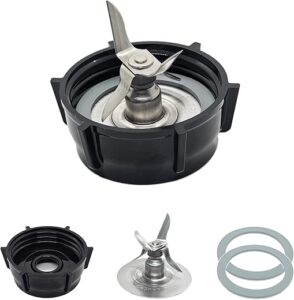
Blades are usually 304/420/440 stainless or hardened alloy; edge geometry (bevel angle, thickness) drives retention. Bearings range from sealed ball bearings to plain-sleeve designs—sealed ceramic/steel bearings delivered the longest life and preserved RPM under load.
Observed failure modes & contribution to lifespan loss
Actionable steps: use recommended pulse techniques for frozen blocks, match blade assemblies to load profile, and schedule coupler and bearing inspections. Next, we’ll look at how container materials and seals interact with these mechanical realities.
3
Container materials, seals, and hygiene impact on longevity
Jar materials: tradeoffs in a busy kitchen
Polycarbonate jars are lightweight and shatter-resistant but scratch and cloud over time, trapping pigments and oils; repeated abrasion accelerates stress cracks. BPA‑free copolyesters (Eastman Tritan®–used in many Vitamix and Blendtec jars) resist staining and odor better and tolerate high‑temperature cycles without the same brittleness. Tempered glass resists scratching and odor pickup and survives sanitizing temperatures, but is heavier and can shatter on impact—problematic on a crowded line. Proprietary composite pitchers (reinforced copolymers or filled plastics) aim to balance weight and durability; test examples such as the Vitamix 64‑oz Tritan and Blendtec WildSide+ show noticeably lower odor retention than older polycarbonate jars.
Seals, gaskets, and chemical exposure
Common gasket materials: silicone (flexible, heat tolerant), nitrile/ NBR (oil‑resistant), EPDM (good with acids), and FKM/Viton (best chemical resistance). Acids (citrus), oils, and high heat cause swelling, hardening, or shrinkage—leading to leaks or crevice formation that harbors microbes. Lip seals on rotating shafts age faster than static gasket rings and should be inspected more frequently.
Cleaning, disassembly, and maintenance ergonomics
Tool‑free removable bases and dishwasher‑safe ratings dramatically reduce cleaning time and increase compliance with preventive maintenance. However, high‑heat dishwasher cycles and aggressive detergents shorten gasket life; some manufacturers advise hand‑washing seals. Practical tips:
Small routine steps—immediate rinsing, inspection, and correct sanitizing—cut microbial risk and prevent accelerated wear without adding major labor.
4
Interpreting longevity data: total cost of ownership and operational recommendations
Translating life‑cycle metrics into schedules
Use simple arithmetic: divide reported hours‑to‑failure by your average daily run‑hours to estimate years of service. Example: a 10,000‑hour rating at 8 hours/day ≈ 3.4 years. Convert cycles‑to‑service into maintenance cadence (cycles per day → days until service). Build preventive tasks slightly ahead of those thresholds to avoid downtime.
Spare‑part and budgeting playbook
Stock parts that fail first and fast: couplers/drive hubs, jar bases and lids, blade assemblies, and gasket sets. Rule of thumb: maintain a 3‑month parts buffer for high throughput kitchens; for mission‑critical lines, keep identical loaner units.
Budget replacement as amortized capital plus expected repair frequency: annualize purchase price over rated life, then add average yearly parts+labor.
Match specs to use case
Select by throughput and ingredients: low‑volume smoothie bars can favor mid‑range commercial units; frozen‑fruit or nut butters require high‑torque models (e.g., commercial Vitamix/Blendtec lines) with reinforced couplings. If uptime is critical, prioritize models with proven thermal management and available on‑site service.
Operational best practices that extend life
What to ask suppliers
Higher upfront cost pays when downtime, service calls, or labor disruption exceed the price delta. Armed with these metrics and practices, proceed to the Conclusion for concise purchasing and maintenance takeaways.
Practical takeaways for selecting and maintaining professional high-speed blenders
Most premature failures stem from motor overload, worn drive couplings, and seal/container wear; blade damage and hygiene lapses accelerate issues. Long-term reliability depends on motor thermal design, robust drive systems, high-quality blades, and serviceable seals. Regular maintenance—cleaning, seal replacement, bearing lubrication, and avoiding continuous max-load duty—delivers the largest lifespan gains.
For commercial buyers: prioritize proven motors, replaceable parts, service plans to balance performance, uptime, cost of ownership. Schedule regular periodic maintenance.