Data-Driven Comparison: Top Pro Blenders for Heavy-Duty Use
Framing a Data-Driven Approach to Heavy-Duty Blending
This article compares professional blenders for heavy-duty use using objective, measurable criteria. We focus on metrics that matter in commercial and high-volume environments: reliability, throughput, and predictable performance.
You will find a clear methodology and core performance metrics: power, torque, blade efficiency, and throughput. We also cover durability, maintenance, real-world task mapping, and a practical decision framework to help you choose the best heavy-duty blender. Expect data charts and actionable guidance today.
1
Methodology and Metrics: How We Measure Heavy-Duty Performance
Data collection: sources and test environment
We combine manufacturer specifications with empirical lab work and field feedback to build a reliable dataset. Sources include:
Primary metrics we measure
We focus on metrics that predict real-world uptime and throughput:
Scoring system and weighting for heavy-duty contexts
Metrics are normalized and combined into one score; weights favor sustained performance over short bursts:
Practical testing tips you can apply
Examples: when comparing commercial lines (Vitamix commercial series, Blendtec commercial units, Waring commercial models), this approach highlights which units sustain torque and cool reliably over a full service day.
2
Core Performance Metrics: Power, Torque, Blade Efficiency, and Throughput
Power vs. usable torque
Motor horsepower (hp) or wattage is a headline number, but power alone doesn’t tell you what a blender will do under load. Electrical power = torque × angular velocity, so a high-watt motor running at low RPM can still deliver strong torque. For heavy-duty use, prioritize continuous-duty ratings and published torque curves (or measured torque under load) over peak watts or peak RPM. In practice: a café that runs 200 smoothies/day needs a motor that holds RPM while crushing frozen fruit—not one that spikes to 35,000 RPM with no sustained torque.
Why torque under load and RPM retention matter
The real-world test is how little RPM sags when the jar is full. Units that retain RPM convert more energy into maceration and have shorter blend times. Measure or look for:
Blade design and jar geometry: the multiplier effect
Blade shape, diameter, angle, and tip speed determine cut efficiency. Jar shape controls recirculation: tapered or winged jars reduce dead zones and increase throughput. Blade tip speed = blade radius × RPM; a medium-diameter blade at stable lower RPM often outperforms a tiny blade at very high RPM for dense blends.
Examples: Vitamix commercial lines emphasize sustained torque and recirculation jars; Blendtec commercial models drive very high tip speeds for faster purees; Waring’s commercial units favor rugged gearboxes and serviceable bearings.
Measurable outcomes to prioritize
How to read spec sheets
Favor continuous-duty ratings, torque/stall data, blade-tip speed, and serviceability notes. Treat peak RPM and peak watts as secondary. Next we’ll examine how these metrics translate into long-term wear, maintenance needs, and real ownership costs.
3
Durability, Maintenance, and Total Cost of Ownership
Construction quality and common failure modes
Heavy-duty reliability starts with materials and serviceability: cast or machined motor housings, serviceable bearings, robust shaft seals, and accessible coupling hardware. In endurance tests, the most common failures are:
Commercial lines—Vitamix commercial units (Vita‑Prep/Commercial Series), Blendtec Commercial/Stealth, and Waring Commercial—tend to prioritize serviceable bearings and replaceable seals, reducing catastrophic failures.
Cooling, protection, and sealed vs. replaceable components
Active cooling (large vents, dedicated fans) and thermal cutoffs extend continuous run time. Sealed components reduce contamination risk but can make in-field repairs impossible; replaceable couplers, bearings, and gaskets favor quick servicing and less downtime. Choose systems where critical wear parts are documented and available.
Maintenance routines and how they affect uptime
Practical maintenance steps:
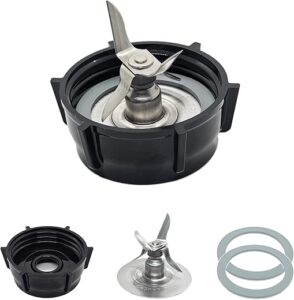
Keeping a small parts inventory (spare jar, lid, gasket, blade assembly) often limits downtime to minutes rather than days.
Framework for estimating Total Cost of Ownership (TCO)
TCO = purchase price + annualized consumables + expected service/repair costs + annual energy use. To calculate annualized cost:
Example: $1,200 purchase / 5 years = $240; consumables $150/yr; service $200/yr; energy $100/yr ⇒ $690/yr operational cost. Use this model to compare models side-by-side and predict real-world ownership impact.
4
Real-World Task Comparisons and Use-Case Mapping
Bridging lab numbers to kitchen realities clarifies which machine actually fits a workflow. Below are comparative snapshots for four representative heavy-duty tasks, followed by operational considerations and a simple use-case matrix.
Crushing ice for high-volume beverage service
Producing nut butters and thick pastes
Batch hot-soup blending
High-throughput puree/sauce production
Noise, space, and electrical requirements
Use-case performance matrix (summary)
Next, use these mapped profiles to build a decision checklist tuned to your operation’s priorities.
5
Decision Framework and Buying Checklist for Heavy-Duty Blenders
Use the mapped profiles to move from data to a purchase: pick priorities, set objective pass/fail thresholds, and validate through short pilots.
Step-by-step decision framework
- Define primary use-case and peak throughput target (e.g., 100 ice-crushes/hr; 20 nut-butter batches/day).
- Match continuous-duty capability to shift patterns (single 8‑hr run vs. intermittent use).
- Choose jar sizes/materials by batch volume and cleaning speed (polycarbonate for light wear; stainless or XL glass for paste and hot liquids).
- Verify serviceability, spare-part pipeline, and warranty terms with vendor.
- Calculate acceptable total cost of ownership (TCO) over 3–5 years including parts, labor, and downtime.
- Pilot the top 2 models under realistic stress tests before committing.
Prioritized checklist (quick reference)
Trade-offs to expect
Acceptance testing guidance & procurement tips
With verified data from pilots and clear TCO limits, you’re ready to choose — next, finalize selection and contract terms.
Choosing with Confidence: Data Over Hype
Prioritize sustained torque and thermal resilience above peak wattage; these metrics predict real throughput and reduce stalls under heavy loads. Serviceability, parts availability, and documented maintenance intervals translate measured durability into uptime and lower lifecycle costs.
Match a blender’s performance profile — torque curve, blade efficiency, and duty cycle — to your specific tasks to ensure predictable output. Use the decision framework and checklist here to choose objectively and minimize downtime in commercial operations — reliability gains.